Canon R5 C & Sony FX3 share many similarities, but there are also important differences, such as quality, performance, features, design, and connectivity. If you want the best one between them, I Would recommend the Canon R5 C rather than the Sony FX3.
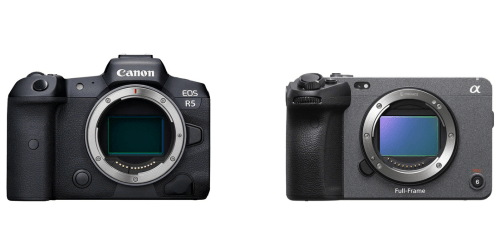
Why Do I Recommend The Canon R5 C?
- The Canon R5 C has an 8K full-frame sensor for extremely detailed video capture and flexible reframing in post-production, while the Sony FX3 uses a 4K-focused full-frame sensor.
- Canon R5 C supports internal 8K RAW recording for high-end cinematic workflows without external recorders, whereas the Sony FX3 relies on external devices for RAW capture.
- It includes a 45-megapixel sensor for professional-grade still photography alongside video work, while the Sony FX3 uses a lower-resolution sensor primarily optimized for video.
- The Canon R5 C comes with a built-in electronic viewfinder for accurate exposure and focus control in bright outdoor environments, whereas the Sony FX3 does not include an EVF.
- Canon R5 C features a mechanical shutter for distortion-free still images and reliable photography workflows, while the Sony FX3 uses electronic shutter only.
- It supports 8K-to-4K oversampled video for higher detail and reduced aliasing in standard 4K output, whereas the Sony FX3 records native 4K without 8K oversampling.
- The Canon R5 C has dedicated photo and cinema operating modes for seamless switching between stills and video production, while the Sony FX3 is designed primarily as a video-only camera.
- Canon R5 C uses CFexpress Type B media for sustained ultra-high-bitrate recording required by 8K and RAW formats, whereas the Sony FX3 uses CFexpress Type A cards with lower maximum throughput.
Maybe the Sony FX3 can make you comfortable because it’s a little bit cheaper than the Canon R5 C. But you have to compromise all the above-mentioned features. Now the Decision is Yours. I hope it was helpful to choose the right one.
Side-by-Side Comparison
| Feature | Canon R5 C | Sony FX3 |
| Camera type | Hybrid photo/video mirrorless | Cinema-oriented compact camera |
| Sensor resolution | 45 MP full-frame | 10.2 MP full-frame |
| Mechanical shutter | Yes | No |
| EVF | Yes | No |
| Internal RAW | Yes | No |
| Internal 8K | Yes | No |
| Max internal resolution | 8K | 4K |
| Oversampled 4K | 8K-to-4K oversampling available | Not 8K oversampled |
| XLR audio | Via optional interface | Via included top handle |
| Timecode | Via adapter support | Via adapter support |
| Media slots | CFexpress Type B + SD UHS-II | CFexpress Type A + SD |
| Photo controls | Full photo mode controls | Limited photo-centric controls |
| Base ISO behavior | Cinema/Log-dependent | Dual-base style for S-Log3 |
| Log profile | Canon Log | S-Log3 |
| Autofocus system | Dual Pixel CMOS AF | Phase-detect AF |
| Battery system | LP-E6 series | NP-FZ100 |
| Body style | Mirrorless-style grip | Cinema-style compact body |
| Top handle | Optional | Included |
| Price | Check Canon R5 C Price | Check Sony FX3 Price |
What Common Both Can Do?
- Full-frame Sensor: Both cameras use a full-frame sensor, allowing for strong low-light performance, shallow depth of field control, and a cinematic look that is widely preferred in professional video production.
- CMOS Sensor Technology: Each model relies on CMOS sensor architecture, which enables fast readout speeds, efficient power usage, and reliable performance for both video capture and autofocus operations.
- Interchangeable Lens System: Both cameras support interchangeable lenses, giving creators flexibility to choose focal lengths, apertures, and optical characteristics that match different shooting scenarios.
- Internal 4K Video Recording: Canon R5 C and Sony FX3 both record 4K video internally, ensuring high-quality footage without requiring external recorders for standard professional workflows.
- 4K 120p Recording: Each camera supports high-frame-rate 4K recording up to 120 frames per second, making them suitable for smooth slow-motion footage in sports, action, and creative cinematography.
- Active Cooling System: Both cameras include active cooling fans, which helps manage heat effectively and allows for extended recording sessions without overheating interruptions.
- Unlimited Recording Capability: With active cooling in place, both models are designed to support long-duration recording sessions, which is essential for interviews, events, and documentary work.
- Log Gamma Profiles: Canon R5 C and Sony FX3 offer logarithmic gamma profiles, enabling greater dynamic range capture and more flexibility in color grading during post-production.
- 10-bit Internal Recording: Both cameras record 10-bit video internally, providing richer color depth and smoother gradients compared to standard 8-bit recording.
- Full-size HDMI Output: Each camera features a full-size HDMI port, improving connection reliability when using external monitors or recorders in professional setups.
- External RAW Output Support: Both models can output RAW video to compatible external recorders, allowing higher data rates and maximum post-production flexibility when required.
- In-body Image Stabilization: Canon R5 C and Sony FX3 include in-body image stabilization, helping reduce camera shake during handheld shooting and improving overall footage stability.
- Advanced Autofocus System: Both cameras use advanced autofocus systems capable of continuous tracking, making them reliable for moving subjects during video recording.
- Face and Eye Detection: Each camera supports face and eye detection autofocus, which is especially useful for interviews, vlogging, and solo shooting situations.
- Microphone Input: Both models include a dedicated microphone input, allowing direct connection of external microphones for improved audio quality.
- Headphone Monitoring: Canon R5 C and Sony FX3 provide headphone outputs, enabling real-time audio monitoring during recording to ensure clean sound capture.
- Dual Card Slots: Both cameras feature dual card slots, offering recording redundancy or extended recording capacity for professional workflows.
- USB-C Connectivity: Each camera includes USB-C connectivity for data transfer, power delivery, and accessory support, improving versatility in modern setups.
- Weather Sealing: Both models are built with weather-resistant construction, allowing more confident shooting in challenging outdoor environments.
- Professional Video Tools: Canon R5 C and Sony FX3 include professional monitoring and exposure tools, supporting precise control over video capture in demanding production environments.
Common Features
| Feature | Canon R5 C | Sony FX3 |
| Sensor format | Full-frame | Full-frame |
| Sensor type | CMOS | CMOS |
| Lens mount system | Interchangeable lenses | Interchangeable lenses |
| Internal 4K video recording | Yes | Yes |
| 4K 120p recording | Yes | Yes |
| Active cooling system | Yes | Yes |
| Unlimited recording (cooling-based) | Yes | Yes |
| Log gamma profiles | Yes | Yes |
| 10-bit internal recording | Yes | Yes |
| HDMI output | Full-size HDMI | Full-size HDMI |
| External RAW output support | Yes | Yes |
| In-body image stabilization | Yes | Yes |
| Phase-based autofocus | Yes | Yes |
| Face and eye detection AF | Yes | Yes |
| Audio microphone input | Yes | Yes |
| Headphone monitoring | Yes | Yes |
| Dual card slots | Yes | Yes |
| USB-C connectivity | Yes | Yes |
| Weather sealing | Yes | Yes |
| Professional video tools | Yes | Yes |
| Price | Check Canon R5 C Price | Check Sony FX3 Price |
FAQ
Is the Canon R5 C or Sony FX3 better for professional video work? Do both cameras support full-frame video recording? Can both cameras record 4K at high frame rates? Is internal RAW recording available on both models? Do both cameras support log profiles for color grading? Are the cameras suitable for long recording sessions? Do both models include in-body image stabilization? Can external microphones and headphones be used with both cameras? Do both cameras support external monitors or recorders? Are both cameras compatible with interchangeable lenses? Is autofocus reliable for video on both cameras? Do both cameras support 10-bit internal video recording? Are both cameras weather-sealed for outdoor use? Can both cameras be powered or charged via USB-C? Are the Canon R5 C and Sony FX3 suitable for solo creators and small crews? |